
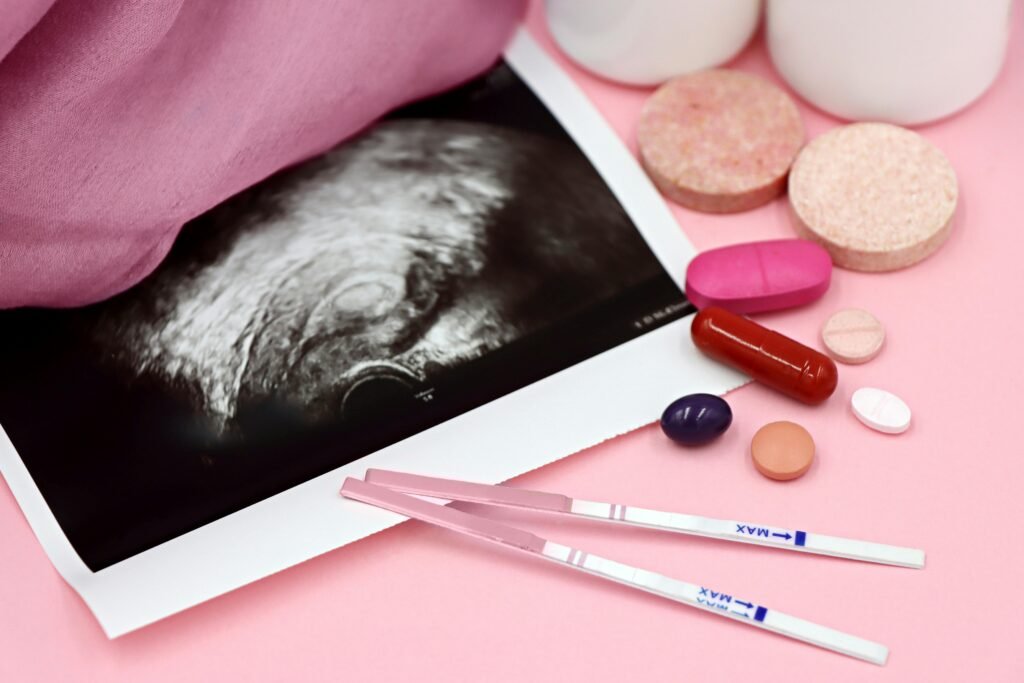
Every month that passes without a positive test can feel heavier than the last — and vaguer than the last, too, if nobody can tell you why. "Just relax" and "give it time" are the two sentences almost every woman trying to conceive hears at some point, usually right when she needs a real answer instead.At Integrative Health Clinic in Amsterdam, this is the starting point for most of the women I see: not infertility in the strict sense, but subfertility a reduced chance of conceiving that hasn't been fully explained. Some are just beginning to track cycles. Others are mid-way through an IUI or IVF trajectory and want their body supported, not just monitored. The work sits between conventional reproductive medicine and a broader, whole-body view of fertility.
Subfertility Is a Spectrum, Not a Verdict
Clinically, “infertility” is defined by the World Health Organization as the absence of pregnancy after 12 months of regular, unprotected intercourse. Dutch general practice tends to use the softer term subfertility instead — reduced fertility, not proven impossibility. That distinction matters: a subfertility diagnosis describes where you are, not where you’ll stay.
Two patterns show up most often:
- Primary subfertility — no previous pregnancy, despite trying for a meaningful stretch of time.
- Secondary subfertility — at least one previous pregnancy (live birth, miscarriage, or termination), followed by an unexpected difficulty conceiving again.
Neither pattern means children are off the table. Both simply mean it’s worth investigating what’s making conception harder than the textbook says it should be.
This guide looks at female subfertility specifically — what tends to drive it, and where support can help.
The Numbers, in Context
Roughly one in six couples worldwide experiences subfertility at some point. In the Netherlands, fertility complaints bring a large number of women between 25 and 44 into GP offices and fertility clinics every year, and age is a bigger factor than most people expect. Per-cycle conception odds are already measurably lower at 35 than at 25, and drop again after 40, even with textbook-regular cycles and confirmed ovulation. Roughly 5% of couples ultimately remain involuntarily childless, though many others conceive spontaneously with time. Age isn’t destiny, but it does change the calculus of how long to wait before investigating. In concrete terms: a healthy 30-year-old has roughly a 20% chance of conceiving in any given cycle, falling to under 5% per cycle by 40.
" A subfertility diagnosis describes where you are, not where you'll stay "
What Actually Causes Female Subfertility?
Conventional fertility medicine groups the causes into a handful of categories. Knowing which bucket you might fall into changes what’s worth asking your GP or gynaecologist.
- Ovulation and cycle disruption — the single most common driver. This includes PCOS (irregular ovulation, elevated androgens, insulin resistance), functional hypothalamic amenorrhoea (often triggered by stress, under-eating, or over-exercising), thyroid dysfunction in either direction, elevated prolactin, and luteal phase defects where progesterone doesn’t hold long enough to support implantation.
- Tubal and pelvic factors — damaged, blocked, or adhesion-bound fallopian tubes, most often from past pelvic inflammatory disease (frequently chlamydia-related, sometimes silent at the time), endometriosis, or previous abdominal surgery. Beyond lowering conception odds, tubal damage also raises the risk of ectopic pregnancy.
- Uterine and cervical structure — congenital uterine shape variations, fibroids distorting the cavity, Asherman’s syndrome (scarring), or cervical mucus that doesn’t support sperm transport.
- Broader health and lifestyle load — smoking, alcohol, being significantly under- or overweight, insulin resistance, autoimmune conditions, and exposure to endocrine-disrupting chemicals. None of these act in isolation; they tend to compound whatever gynaecological factor is already at play.
- Unexplained subfertility — in roughly three out of ten couples, every standard test comes back within normal range and pregnancy still doesn’t happen. That’s not the same as “nothing is wrong.” It usually means the cause sits below the resolution of routine testing — in egg quality, endometrial receptivity, immune signalling, the microbiome, or systemic regulation that bloodwork alone doesn’t capture.
How the Dutch System Handles It
If you’ve not yet gone further than your GP, here’s roughly what to expect.
Your GP will ask about how long you’ve been trying, cycle regularity, prior pregnancies or losses, history of STI’s or pelvic infections, past surgery, and lifestyle factors then examine you for signs of hormonal or anatomical issues. After 12 months of trying (sooner if there are clear red flags), expect bloodwork and a referral.
The fertility clinic typically runs hormone panels (FSH, LH, oestradiol, progesterone, AMH, prolactin, thyroid), a transvaginal ultrasound, infection screening, and depending on findings an HSG or laparoscopy to check the tubes and look for endometriosis.
From there, treatment is matched to what’s found: watchful waiting where the outlook is still favourable, ovulation induction for anovulatory cycles, IUI for unexplained or mild-factor subfertility, and IVF or ICSI where tubal or male-factor issues are more significant, or earlier steps haven’t worked.
Medical treatment is genuinely effective and it’s also, by design, narrow. It rarely touches digestion, systemic inflammation, micronutrient status, the microbiome, or the stress load a woman is carrying through the process. That’s the gap integrative care is built to fill, ideally running alongside your medical team rather than instead of it.
Where Integrative Support Fits In
As Adriana Guarín — a mesologist registered with NVVM, VBAG, and RBCZ — my approach combines conventional medical knowledge with orthomolecular medicine, Ayurveda, Traditional Chinese Medicine, herbal medicine, and homeopathy — not as alternatives to your gynaecologist, but as a layer that looks at the whole system your reproductive health depends on.
A first consultation (around 90 minutes) covers your fertility history and any results so far, your cycle in detail, digestion and energy, sleep, mood and stress, your broader medical history, and your current lifestyle and supplements.
A mesological assessment maps functional imbalances across digestion and absorption, liver and detox capacity, blood sugar regulation, the endocrine axis (ovaries, thyroid, adrenals, pituitary), circulation and inflammation, and nervous system load. Where it’s useful, I also bring in TCM concepts (Kidney Jing, Liver Blood, the Chong and Ren meridians, Qi and Blood stagnation) and Ayurvedic ones (agni, dosha balance, the reproductive dhatus) to build a fuller picture of your fertility “terrain.”
A personal plan follows — nutrition targeted at hormone balance, egg quality, endometrial health and the microbiome; sleep, stress and movement adjustments; supplements or herbal support where indicated; and, where you’re in an active IUI/IVF/ICSI cycle, guidance on timing that works with your treatment rather than around it. This is designed to sit alongside your GP or gynaecologist, not replace them.
Signs This Support May Be Right for You
- You've been trying for 12 months or more without success
- You've been diagnosed with PCOS, endometriosis, a thyroid condition, or unexplained subfertility
- You're starting, or already in, an IUI, IVF, or ICSI trajectory and want your body supported through it
- Your cycle, digestion, energy, or stress feel visibly out of balance, and you suspect it's connected
- You want a structured, evidence-aware approach that still makes room for tradition
IMPORTANT: This content is informational and doesn’t replace assessment by your GP or gynaecologist. Integrative support is intended to complement medical fertility care, not substitute for it.
Fertility conditions
Integrative Health Clinic
Read more about fertility problems on my Fertility condition page.
Common Questions
FAQ About Female Subfertility
What's the difference between infertility and subfertility?
“Infertility” is the formal WHO term for no pregnancy after 12 months of regular, unprotected intercourse.
Dutch clinicians usually prefer “subfertility” because it describes reduced odds, not a fixed impossibility. Many people diagnosed with subfertility do go on to conceive, with or without treatment.
How common is unexplained subfertility?
It’s estimated to account for roughly 30% of subfertility cases.
Situations where every standard test for both partners comes back normal, yet pregnancy still hasn’t happened. It points to causes that fall outside what routine testing measures, not to there being no cause at all.
Can integrative support work alongside IVF or IUI?
Yes, absolutely. It’s designed to run in parallel with your fertility clinic, not instead of it.
Supporting digestion, inflammation, nutrient status, and stress load while your medical team manages the treatment protocol itself.
When should I see a doctor about subfertility rather than waiting longer?
Generally after 12 months of regular, unprotected intercourse without pregnancy or sooner if you have known risk factors such as irregular cycles, a PCOS or endometriosis diagnosis, or you’re over 35.
Does age really change the odds this much?
Yes. Per-cycle conception chances are measurably lower at 35 than at 25, and lower again after 40 — even with regular ovulation. It’s one of the clearest reasons not to delay an initial check-up if you’re already in your mid-thirties.

If you’ve searched “natural remedies for IBS” before, chances are you’ve already tried half the list: eat more fibre, drink more water, cut down on stress, take a probiotic. Some of it helped a little. Some of it didn’t move the needle at all — or even made things worse. That’s not a failure on your part. IBS isn’t one condition with one cause; it’s a cluster of symptoms that can be driven by completely different underlying imbalances from person to person, which is exactly why generic advice has such an inconsistent track record.

Every month that passes without a positive test can feel heavier than the last — and vaguer than the last, too, if nobody can tell you why. "Just relax" and "give it time" are the two sentences almost every woman trying to conceive hears at some point, usually right when she needs a real answer instead.At Integrative Health Clinic in Amsterdam, this is the starting point for most of the women I see: not infertility in the strict sense, but subfertility a reduced chance of conceiving that hasn't been fully explained. Some are just beginning to track cycles. Others are mid-way through an IUI or IVF trajectory and want their body supported, not just monitored. The work sits between conventional reproductive medicine and a broader, whole-body view of fertility.